

Pack of 100 Wool Pots
Pack of 100 Wool Pots
Grow stronger starts with a Pack of 100 Wool Pots - natural, biodegradable wool plant pots designed for seed starting, young plants, herbs, flowers and vegetable starts.
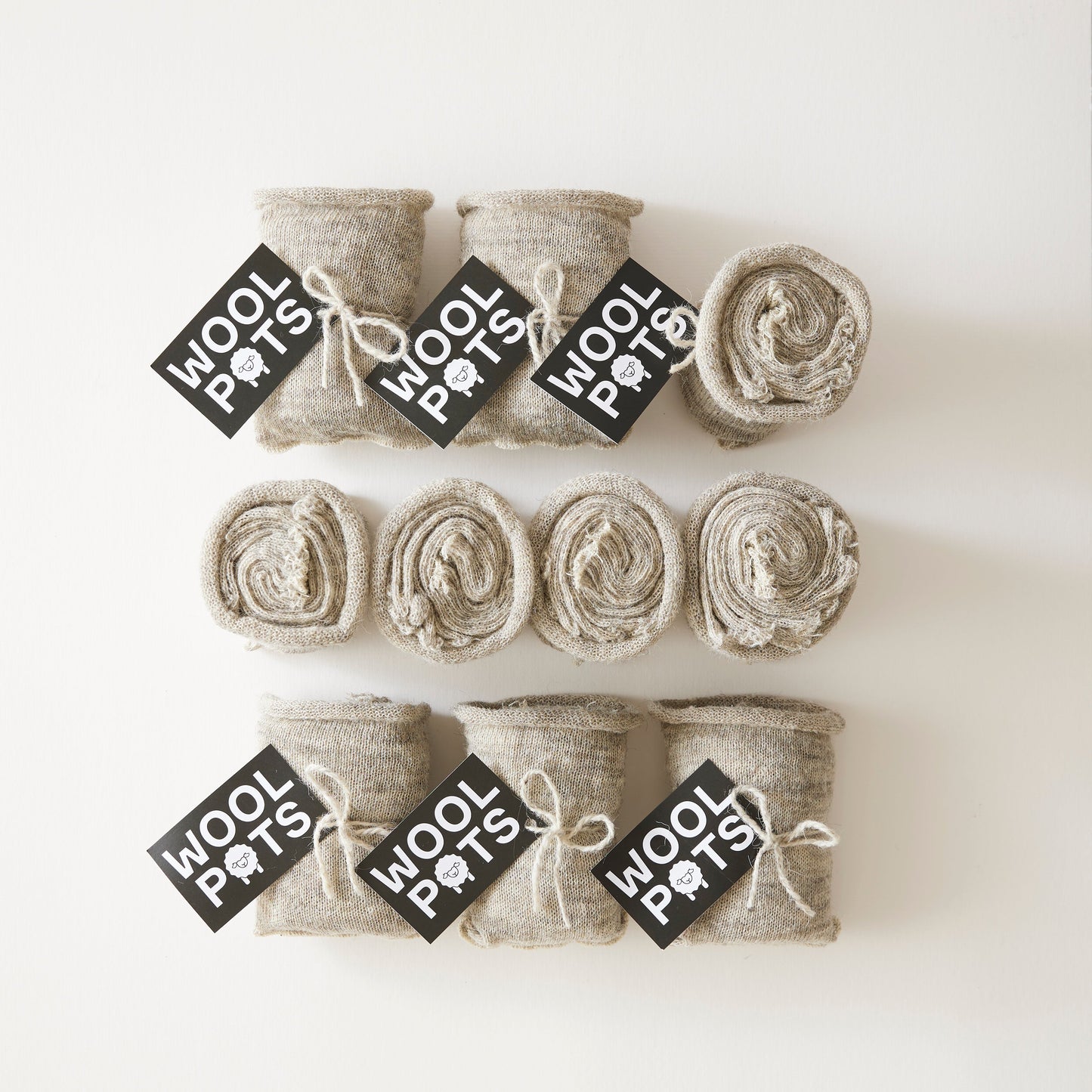
Made from 100% natural wool and sized at approximately 10 cm x 18 cm / 3.9 x 7.1 inches, Wool Pots give gardeners a practical plastic-free alternative to disposable nursery pots. Fill with seed-starting mix or potting soil, grow your plant as normal, then plant the whole pot directly into soil, a raised bed or a larger patio container.
Why choose this pack?
This Pack of 100 is ideal for homesteads, community gardens, garden clubs, schools, plant sales and larger seasonal sowing. It gives you the benefits of Wool Pots in a format suited to bulk pack for serious gardeners and community growing.
Key benefits
· Plant the whole pot directly into soil, raised beds or larger containers
· Helps reduce root disturbance because the seedling is not pulled from a rigid plastic pot
· Natural wool helps hold and wick moisture around young roots
· Breathable structure supports healthy root development
· Plastic-free and biodegradable alternative to conventional seed-starting pots
· Wool rim can help deter slugs and snails when left above soil level
· Suitable for vegetables, herbs, flowers, cuttings and young garden starts
· Made in Portugal
· Minimal packaging with yarn and a simple instruction card
Best plants to grow in this pack
Use Wool Pots for tomatoes, peppers, beans, peas, squash, cucumbers, pumpkins, sunflowers, basil, parsley, cilantro, dill, lettuce, kale, broccoli, cabbage, flowers and young bedding plants.
They are especially useful for seedlings that dislike root disturbance or need a careful move from tray to garden.
How to use Wool Pots
- If needed, stretch the soft Wool Pot over a rigid 4-inch or 5-inch ceramic pot or vase to make filling easier.
- Fill with seed-starting mix or potting soil and firm gently.
- Sow seeds, add cuttings or transplant a young plant into the Wool Pot.
- Water gently from the top for the first watering.
- Bottom-water from a tray where suitable so the wool can wick moisture upward.
- Grow until the seedling is established and ready for its next space.
- Plant the entire Wool Pot into soil, a raised bed or a larger container.
- Leave the rim above soil level if you want the wool texture to help deter slugs and snails.
- Leave a gap between your planted wool pots so that you maximize the air that gets to the roots. Do not let two wool pots touch when filled.
Why Wool Pots are different from plastic pots
With plastic pots, the plant must be removed before transplanting. That can disturb fine roots, break the root ball and slow establishment. Wool Pots stay with the plant. The roots will grow through the wool structure as the pot breaks down naturally in the soil which then feeds the soil and the plant with essential nutrients and goodness.
This makes Wool Pots a simple upgrade for gardeners who want less plastic and less handling at transplanting time.
Natural product note
Wool is a natural material. Color, shade and texture can vary from pot to pot. These natural differences do not affect performance.
Share
Product FAQ
Who is the Pack of 100 best for?
This pack is best for homesteads, community gardens, garden clubs, schools, plant sales and larger seasonal sowing.
What size are the pots?
Each regular Wool Pot is approximately 10
cm x 18 cm / 3.9 x 7.1 inches.
Do I plant the whole pot?
Yes. Grow your seedling in the Wool Pot,
then plant the entire pot directly into soil, a raised bed or a larger
container.
Do Wool Pots help reduce transplant shock?
They help reduce root disturbance because
the plant does not need to be pulled from a rigid plastic pot.
How should I water them?
Water gently from above at first, then
bottom-water in a tray where suitable. Check the growing mix regularly.
Are they reusable?
No. Wool Pots are designed to stay with the
plant and biodegrade after planting.
Do they deter slugs and snails?
They can help deter slugs and snails when
the rim is left above soil level, but they are not a guaranteed pest-control
method.